

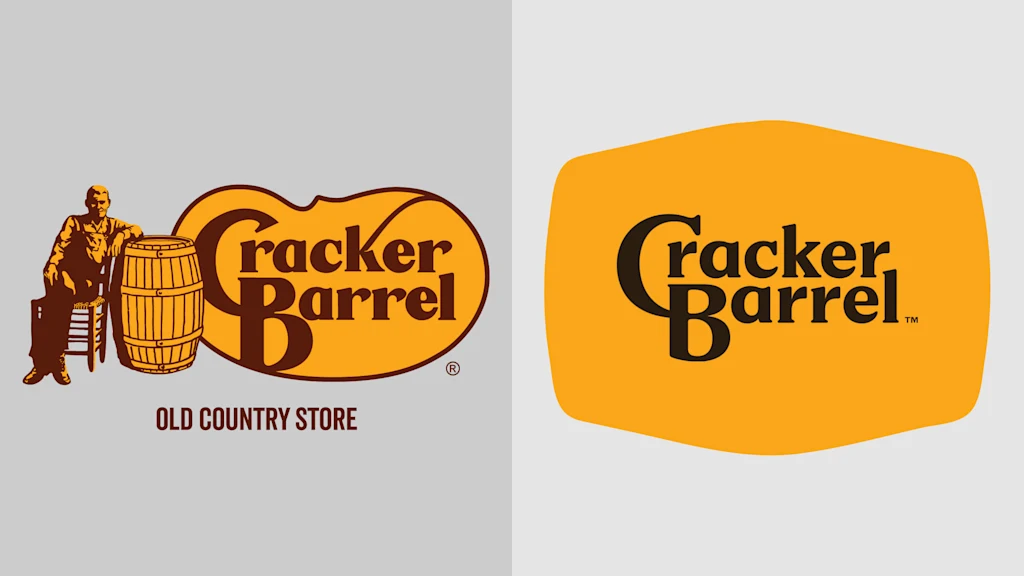
Last August, as the internet piled on Cracker Barrel over its new “modern” logo, something even stranger was unfolding at Steak ’n Shake.
For one week, the chain’s X account didn’t try to sell a single burger. Instead, it attacked Cracker Barrel’s “destruction of shareholder value,” alongside other financial grievances. It sold $20 red MAGA-style hats bearing the words “Fire Cracker Barrel CEO,” and drew attention to a billboard near Cracker Barrel’s Nashville headquarters that Steak ’n Shake had secured, repeating the line.
Days later, Cracker Barrel admitted defeat. The logo reverted. The internet moved on.
Steak ’n Shake did not. The account remained fixated for months—into 2026—hammering Cracker Barrel’s shrinking portion sizes, falling foot traffic, use of microwaves, alleged day-old biscuits, and 85% stock drop.
Meanwhile, those responding to the posts were often . . . crypto bros? Who were cheering Bitcoin? What on earth was going on? And why was Maxim magazine, out of nowhere, getting involved?
The answer to these questions, and a bunch you didn’t think of yet, was Steak ’n Shake’s CEO, Sardar Biglari.
The 48-year-old rabble-rouser, arguably the most notorious activist investor in the restaurant world, was trying a new tactic. In the past, Biglari fought for control of businesses via his holding company or investment funds. In 2025, he conscripted his biggest consumer brand, Steak ’n Shake, to be the public face of his battle to send Cracker Barrel’s CEO packing.
It was just one of several campaigns Biglari mounted across the industry over the past year. Others forced the boards of Jack in the Box and El Pollo Loco to trigger their so-called poison pill, a takeover-deterrent plan that makes a company too bitter for a hostile buyer to swallow. (Jack in the Box, which has been plagued by nearly 11 C-suite and board member departures since 2020, has so far kept Biglari at bay. El Pollo Loco is said to be exploring private equity buyout offers rather than sell to him.)
Cracker Barrel first deployed a “poison pill” in 2011 to stop Biglari from buying more shares and has done it again three times since; waging defense against his campaigns has cost shareholders $31 million, according to the company.
Some chain restaurants, such as Chick-fil-A, In-N-Out, and Starbucks, have high-profile founders and burnished legacies that they uphold. Others, run by private equity, bear no sign of their corporate leaders or founding missions. (“Roark Capital”? One in every 20 dollars spent dining out goes to one of its two dozen restaurant brands, including Subway, Dunkin’, Buffalo Wild Wings, and Sonic.)
But Biglari is neither: He uses his burger chain’s cash to buy stakes in rival restaurant companies, then demands they answer to him, as a competitor seated at their table.
Not everyone is a fan. “He’s considered to be very strange by most professionals in the restaurant world,” says analyst John Gordon, founder of Pacific Management Consulting Group. Industry veteran John Hamburger, president of the Franchise Times Corp., adds, “Restaurant people dismiss him because he’s, you know, upsetting the apple cart.”
As a financial analyst told The New York Times’s Kevin Roose in 2012, Wall Street is likewise “very skeptical of [Biglari]. . . . Even if he’s absolutely right, it’s somewhat annoying.”
Compounding the enigma surrounding Biglari is the fact that he speaks publicly just once a year, through the Biglari Holdings annual shareholder letter. (He declined to respond to an interview request for this article.)
Pulling from interviews over the past month with people in finance, the restaurant industry, and even D.C. politics, we’ve pieced together how this polarizing figure became a force—with the power to oust CEOs and reshape what chains serve, how they’re run, and what they stand for—and where he may turn his withering attention next.
Buying into the burger business
Biglari has a knack for, as he sees it, taking a chisel to troubled companies. “We Michelangelo’ed Steak ’n Shake,” he wrote in one year’s shareholder letter, explaining: “The sculpture is already complete within the marble block, before I start my work.”
Biglari does know a thing or two about fresh starts. In 1984, when he was 7, his family fled Iran, where they were persecuted after the 1979 revolution. They landed in San Antonio, where his father had military contacts he’d made years earlier as a brigadier general in the Shah’s Imperial Armed Forces. His parents started a rug importing business.
Biglari later cofounded an internet service provider, which was headquartered on the floor above the store. Internet America acquired it in 1999, just before the dot-com bubble burst. He started a hedge fund from the payout, requiring a minimum of $250,000 to join—asking high-net-worth San Antonians to trust that a man in his twenties with one successful exit could make them “large sums of money.”
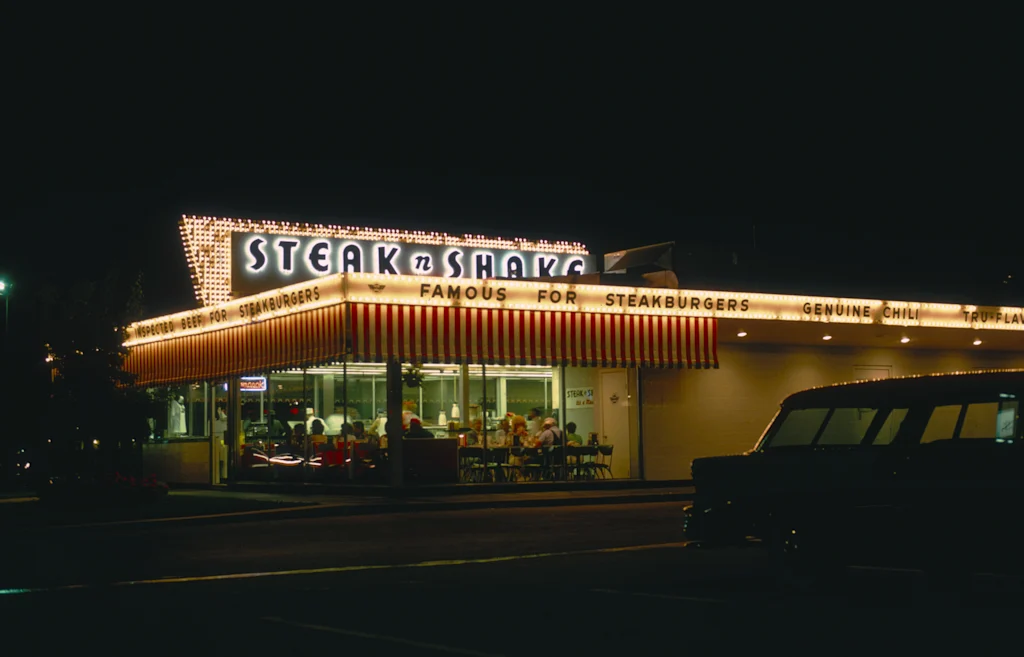
The first Steak ’n Shake had opened off Route 66 in Illinois during the Great Depression. Founder Gus Belt sold premium “Steakburgers” for 12 cents from a converted Shell service station—back when the average burger cost about a nickel, and the average patty often contained oatmeal or sawdust. Belt’s signature move was grinding high-grade cuts of sirloin and T-bone in front of customers, under the banner “In sight, it must be right.”
The chain became beloved across the Midwest for quality ingredients and a theatrical dining experience: Customers could watch the meat get prepared from their tables, or have carhops deliver burgers to their cars outside. Restaurateur Danny Meyer, raised in St. Louis, says he spent many weekends there as a teenager, and his own Shake Shack was partly an attempt to replicate those “awesome” parking lot experiences.
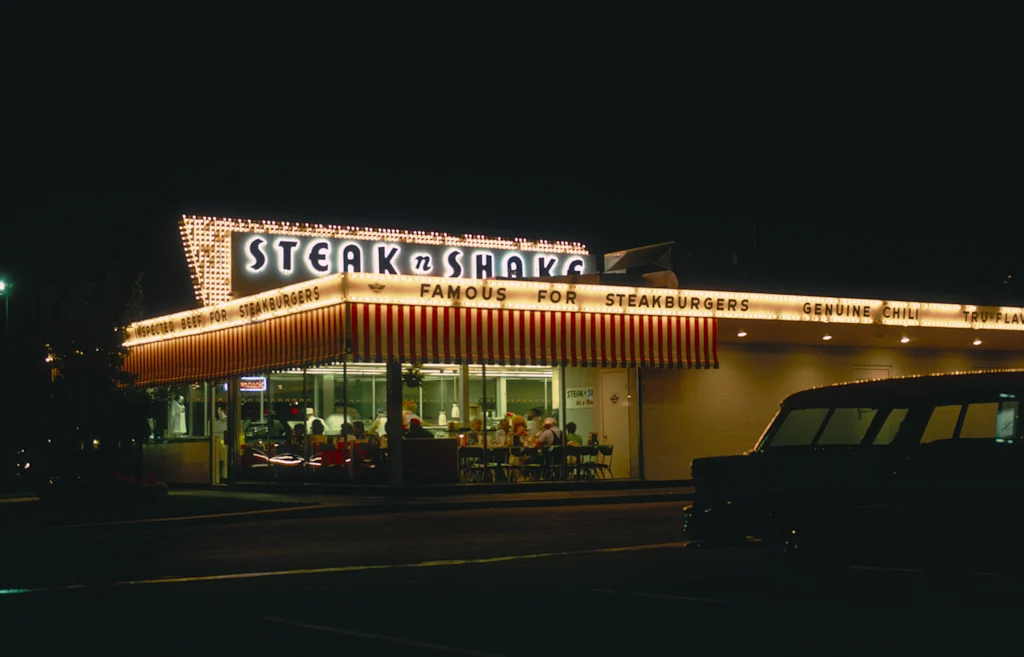
The chain retained these characteristics, more or less, until 2008, when Biglari maneuvered himself into the CEO role during a five-month-long coup—acquiring shares, winning board seats, and forcing sitting members to resign.
At the time, Steak ’n Shake had posted 14 straight quarters of sales declines.
To make it into a David-level opus, Biglari (who frequently compares himself to an artiste) instituted a value-pricing strategy that shrank the eight-page menu to a bifold, reversing the trend almost instantly and sparking seven years of same-store sales growth, an industry record at the time.
In 2012, The New York Times declared Steak ’n Shake “back on solid ground,” and Forbes put Biglari alongside Larry Page and Elon Musk on its list of most powerful CEOs under 40. Store count climbed 25%, reaching 626 units by 2018.
Losing the Doughboys
By now, Biglari was looking for other marble blocks to chisel. Through some financial acrobatics in 2010, his hedge fund sold itself to Steak ’n Shake, which changed its name to Biglari Holdings.
Overnight, a Midwestern burger chain became a diversified holding company with an in-house investment arm. He merged it with Western Sizzlin in the same move and accumulated stakes in Red Robin and Sonic.
Then, in 2011 and 2012, he deployed $241 million from the growing coffers of Biglari Holdings to acquire a 20% stake in Cracker Barrel.
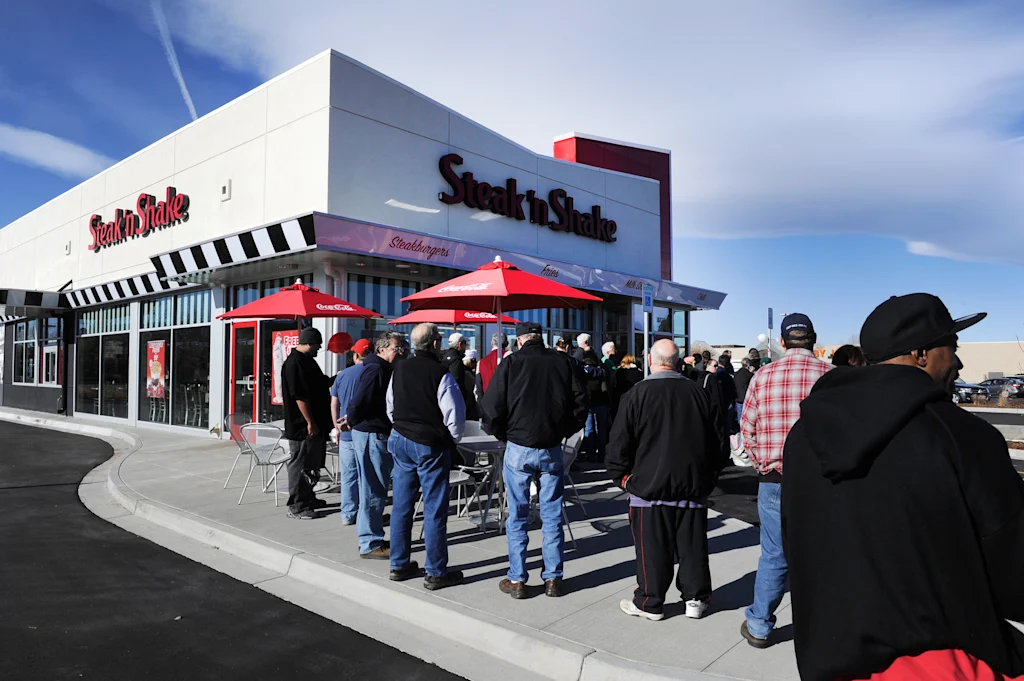
By the mid-2010s, the market cap of Biglari Holdings had soared past $500 million. It acquired the once-influential lad mag Maxim, installed Biglari as editor-in-chief, and made the “Maxim women” available for Steak ’n Shake grand openings. To this meat-greased, underdressed empire, he added two insurance companies, a pair of oil ventures, and a luxury hedge: Ferrari shares, today a $200 million stake—the company’s largest holding.
The structure echoes the portfolio built by Biglari’s idol, Warren Buffett, which counts Dairy Queen and Geico among its earliest acquisitions (though it’s doubtful Buffett would describe his own collection as the “equivalents of Renoirs, Cézannes, and Rembrandts” in his “economic museum”).
Today, Biglari’s shareholders include the two world’s largest asset managers, BlackRock and Vanguard, and Gamco Investors, the investment firm run by billionaire “Super Mario” Gabelli.
But his antics were making new enemies. From 2011 to 2014, Cracker Barrel shareholders rejected four proxy bids by Biglari in a row—first to acquire board seats, then for outright control of the chain.
A prominent governance advisory firm put the entire board of directors of Biglari Holdings in its “Hall of Shame” over Biglari’s unusual compensation structure, which it called “as egregious as we have ever seen” and “the type of stuff that activists rail against” at other publicly traded companies. (Most public CEOs take a salary, Warren Buffett included; Biglari was simply awarding himself a massive cut of the company’s annual increase in value.)
A small hedge fund, Groveland Capital, swooped in to try to administer a dose of his own medicine. “Steak ’n Shake-up? Effort to Oust CEO Biglari in the Mix,” The Indianapolis Star reported. It failed, and in 2016 Biglari paid himself more than $33 million in compensation.
“That’s more than the CEOs of McDonald’s Corp. and Chipotle Mexican Grill Inc. earned last year. Combined,” journalist Jonathan Maze observed in Nation’s Restaurant News. Biglari created a Monaco office to work from, flying there in his new Gulfstream G550 jet, the same type Elon Musk uses.
It soon became clear, however, that value pricing was a recession-era fix, and by 2020, with Americans spending freely again, it had stopped working. COVID-19 gave Biglari the cover he needed for another “radical” rebrand. He invested $50 million to update Steak ’n Shake interiors, killed table service, and replaced cashiers with kiosks.
Nick Wiger and Mike Mitchell, hosts of the chain-restaurant-focused podcast Doughboys, look back on both the reduced menu and the kiosks as a “Pyrrhic victory.” Yes, costs were cut, but so were “the hooks that loyal customers counted on since 1934.”
When they first visited a Southern California location in 2015 for the show, the experience so horrified them that dunking on Steak ’n Shake became a decade-long running gag.
I asked them whether, in their expert Steak ’n Shake opinion, they felt that things had bottomed out—or whether worse was still possible. They responded in writing:
Wiger: It pisses me off that this strip mine capitalist has enshittified a beloved Midwest brand and vampire-squid sucked out its magic in search of profit.
Mitchell: Steak ’n Shake is definitely getting worse, as is everything else in the world. We have talked about this on Doughboys. But we used to root for local restaurants, then we had to start rooting for smaller regional chains. And now we have to root for giant chain restaurants to just not be as shitty and evil as they normally are.
Also, the last decade should have taught you that things can always get worse. There’s no maxing out on awful.
Wiger: As a society, we’re shitmaxxing.
Mitchell: I believe Steak ’n Shake can defy the odds and get even worse. Now, has Steak ’n Shake’s food declined as much as other chain restaurants? Probably not (looking at you, Wendy’s), but I used to also get excited by the idea of going to Steak ’n Shake, and that does not happen anymore.
By early 2021, reports surfaced that the chain was considering bankruptcy to manage its climbing debt. From 2019 to 2025, it shuttered more stores than Biglari had opened during the hottest years, dropping its count by more than 35% to 404 units. As Biglari was forced to admit, the economics of 20th-century Steak ’n Shake simply “did not work in the modern era.”
Beef tallow, Bitcoin, and RFK Jr.
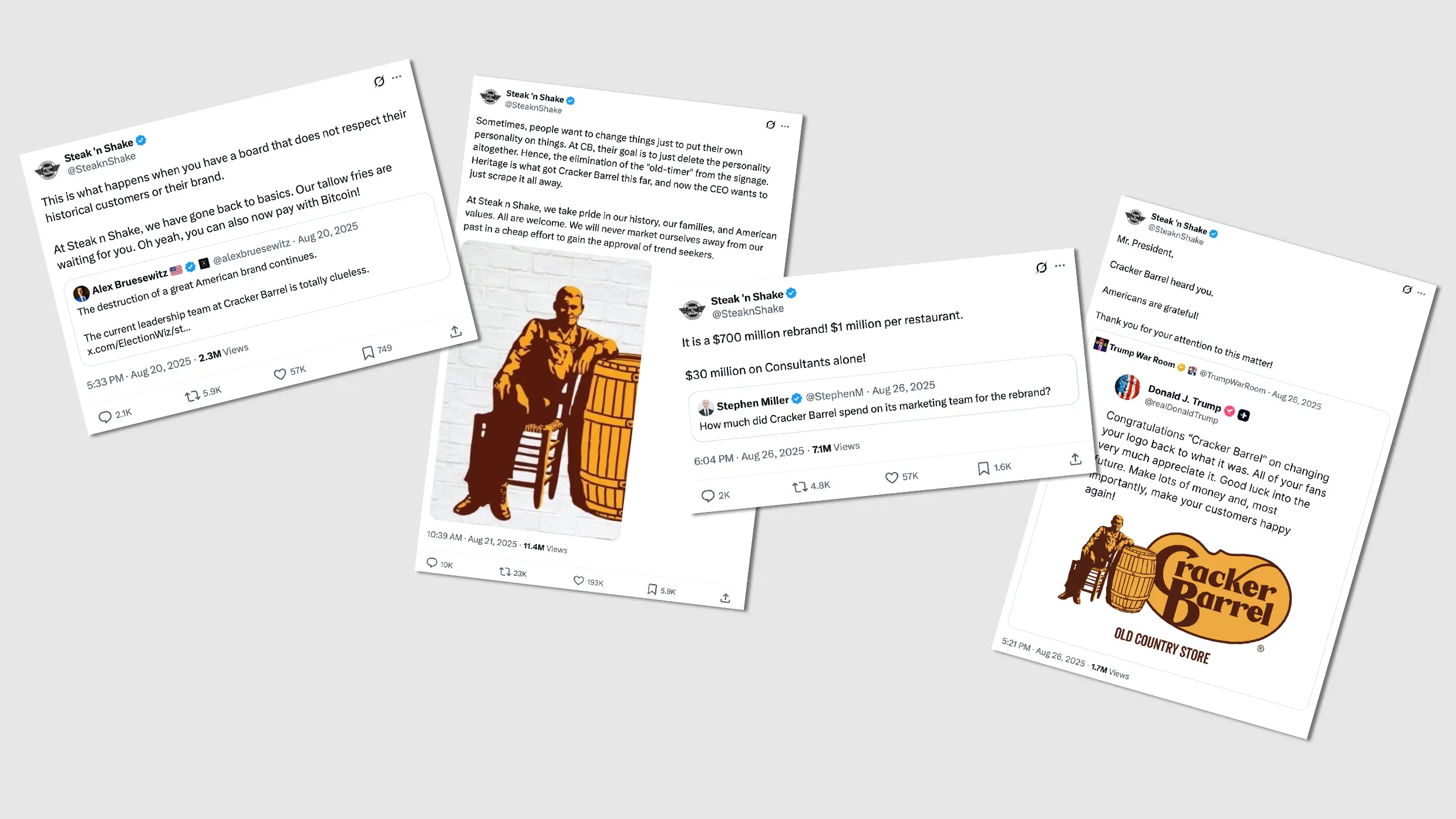
“We will never market ourselves away from our past in a cheap effort to gain the approval of trend seekers,” read the post on Steak ’n Shake’s X account last August, its first attacking Cracker Barrel for its newly slick, sanitized logo.
“This is what happens when you have a board that does not respect their historical customers or their brand,” it said in another. “At Steak ’n Shake, we have gone back to basics,” it added before concluding: “Our beef tallow fries are waiting for you. Oh yeah, you can also now pay with Bitcoin.”
The weird final line rather undercut the argument, but Biglari seemed willing to pay that price. This was a new comeback attempt and his third rebrand of Steak ’n Shake, this time chiseling it into a Trump-era chain that serves MAHA-friendly beef tallow fries and takes Bitcoin.
“Trumpism,” says the analyst Gordon, appealed “to customers in Republican states where most of his restaurants are located and guaranteed publicity.”
The rebrand had a satirical quality. In the Mike Judge movie Idiocracy, certain government agencies are “brought to you by Carl’s Jr.” Last spring, the Trump administration’s Department of Health and Human Services greeted workers with signs advertising “Steakburgers and Beef Tallow Fries” available in the building’s main cafeteria.
Steak ’n Shake had announced its kitchens would switch to beef tallow at the perfect time: after Robert F. Kennedy Jr. publicly declared that beef tallow was now the “MAHA way” in late 2024, but before Trump picked him as HHS secretary in early 2025.
As soon as Kennedy’s nomination was confirmed, Steak ’n Shake began serving “RFK’d” fries. The stunt led to Sean Hannity interviewing Kennedy inside a Florida Steak ’n Shake, followed by a parade of Trump-adjacent characters—Musk, Laura Loomer, Kari Lake, Vivek Ramaswamy—also declaring the greatness of the beef-tallow-slinging chain.
Steak ’n Shake’s website soon introduced a new line of red hats with less-subtle MAGA-like phrases (“Make Americana Great Again,” “Make Frying Oil Tallow Again”). The company installed Tesla Supercharger stations in the parking lots, announced that stores would start flying “the tallest and biggest American flag” allowed by local law, and served beef tallow fries at an El Salvador Bitcoin event that received President Nayib Bukele’s nod of approval.
It also posted a video made by Grok showing Trump, Abraham Lincoln, and what might be two George Washingtons flinging French fries from sleeves that, in AI’s illegible scribbles, appear to say “Berf Tilliw.” This week, it announced Steak ’n Shake’s first-ever chief MAHA officer. For the role, it hired one of Kennedy’s HHS advisers.
Yet some aren’t buying the political turn. “His first political donation was in August of 2023,” one veteran Washington strategist told me—$216 to Trump, followed by a second donation the next year: $241. “This is a newcomer to Republican politics.”
Cracker Barrel, over a barrel
Biglari attracts his share of detractors, says Hamburger, who has covered the restaurant industry for 30 years and was a publicly held restaurant chain’s CFO before that. At first, Hamburger says, he was among that crew.
“But then I looked at him after the first Cracker Barrel go-round, and I thought, That’s pretty smart,” he says. “That company was managed poorly over the years. Really, he is pointing out stuff that’s true—Jack in the Box and Cracker Barrel have been mismanaged.”
Cracker Barrel didn’t make any executives available for interviews for this story, but materials it shared with Fast Company show that Biglari learned about the logo overhaul in 2024 during a meeting he’d requested with its new CEO, Julie Felss Masino. Cracker Barrel says that at this meeting, Biglari “did not express concerns” or offer ideas for how to improve the business.
Steak ’n Shake COO Dan Edwards previously said that his boss advised Cracker Barrel to “focus on the quality of the food and service,” not “waste time changing the brand or its decor” because that could upset customers.
The negative public reaction to the logo change seems like an “I told you so.” But after the blowback last August, two research firms examined X posts that mentioned Cracker Barrel in the hours after the new logo debuted.
One study by PeakMetrics attributed 44% of posts made within 24 hours to a swarm of hired bots it believes were part of a coordinated disinformation campaign. About 70% of the messages contained identical wording, it said. The other firm, Cyabra, estimated that as many as 21% of the accounts themselves were bots. Neither firm could identify who paid for them.
But Biglari didn’t need bots to get the better of Cracker Barrel. During the 2020 proxy contest—the fifth of seven Biglari had waged against then-CEO Sandra Cochran over nine long years—he lambasted her team for losing more than $100 million in less than a year on an untested “eatertainment” concept Cracker Barrel called Punch Bowl Social. He dubbed it “the investment equivalent of Waterloo.”
Cochran responded that over the previous decade Biglari Holdings stock had returned a negative 61% to investors while Cracker Barrel’s was up 520% under her leadership. “We consider the deterioration of Steak ’n Shake, a brand that once held a storied place in American restaurant history, to be a cautionary tale,” she told shareholders.
Unsaid was that Cracker Barrel had also made Biglari Holdings an absolute fortune—more than $800 million over 15 years. In shareholder letters, Biglari has called it the all-time-best investment Biglari Holdings has ever made, double what it has captured by actively running Steak ’n Shake.
And while the logo controversy sent Cracker Barrel shares tumbling to around $30—the company’s lowest level in two decades—Biglari had sold most of his stake before it started. “I have a clean canvas on which to paint and a nearly unlimited palette of colors from which to choose” is another of his art metaphors. His method, though, is to use “the paintbrush only sparingly.”
