

How history shaped one of California’s most iconic real estate markets
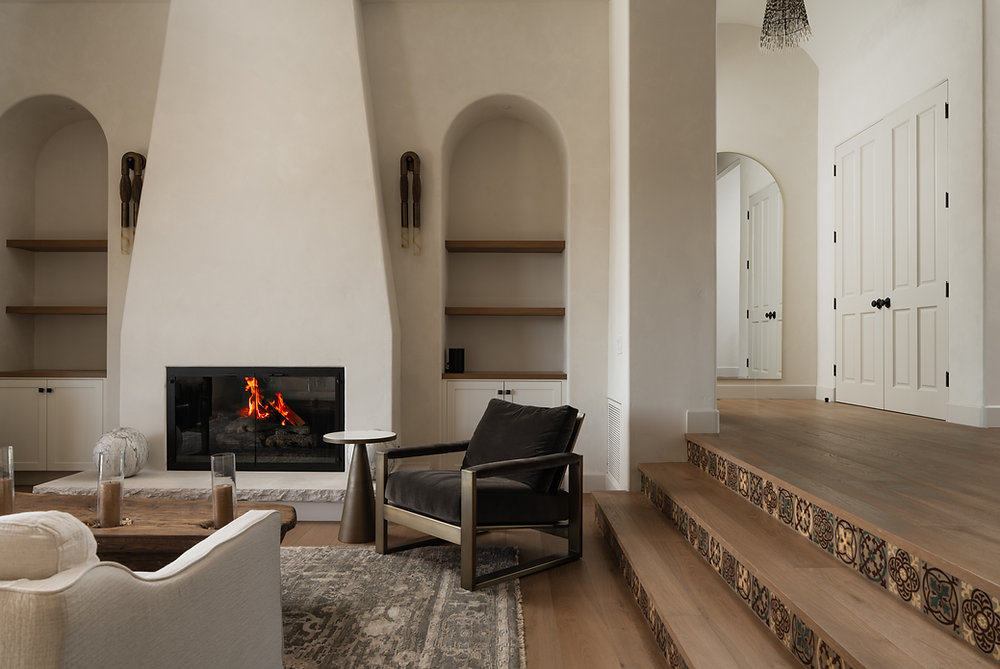
Few places in the United States have a visual identity as distinct and enduring as Santa Barbara and Montecito. From white stucco walls and red clay tile roofs to elegant archways and lush courtyards, Spanish-style architecture defines the character of this coastal community and continues to dominate today’s real estate market.
But this characteristic aesthetic did not arise by chance. It was the result of history, vision and a pivotal moment that transformed Santa Barbara forever.
The Origins: California’s Spanish Colonial Roots
Santa Barbara’s architectural DNA dates back to the late 18th century, when Spanish settlers established the Presidio and Mission Santa Barbara. These early structures introduced key design elements still seen today:
-
Thick whitewashed adobe walls
-
Red clay tile roofs
-
Arched hallways and colonnades.
-
Interior courtyards designed for light and air flow
These features weren’t just beautiful: they were practical and designed to respond to California’s Mediterranean climate.
The turning point: the 1925 earthquake
On June 29, 1925, a devastating earthquake struck Santa Barbara and destroyed much of the city center. While tragic, this moment became a turning point that ultimately defined the city’s future.
Instead of rebuilding with a mix of architectural styles, local leaders, architects and community visionaries made a bold decision: unify Santa Barbara under a cohesive Spanish Colonial Revival aesthetic.
It wasn’t just about rebuilding: it was about creating an identity.
Strict design guidelines were introduced that encouraged:
The result? A city that feels intentional, timeless, and unlike anywhere else in California.
The architects who shaped the appearance
Several influential architects helped make this vision a reality and elevate Spanish architecture to an art form.
George Washington Smith
Often credited as one of the pioneers of the Spanish Colonial Revival in Santa Barbara, Smith’s houses in Montecito combined simplicity, elegance and proportion. His work helped define what we now consider the “Montecito aesthetic.”
Maria Lutah Riggs
Riggs, one of the first licensed architects in California, refined the Spanish style with a softer, more livable approach, seamlessly blending indoor and outdoor spaces.
Wallace Neff
Known for designing homes for Hollywood elites, Neff brought a romantic and glamorous interpretation of Spanish architecture that still influences luxury properties today.
Why Spanish architecture still has a premium
Nearly a century later, Spanish-style homes remain some of the most sought-after properties in Santa Barbara and Montecito, and with good reason.
Timeless design
Spanish architecture does not follow trends, it transcends them. Its proportions, materials and craftsmanship age beautifully.
Indoor and outdoor living
Long before it became a buzzword, Spanish homes were designed for a fluid indoor-outdoor flow, perfectly suited to the Santa Barbara lifestyle.
Architectural integrity
Today’s buyers are increasingly attracted to homes with character, history and authenticity, qualities that Spanish Revival properties offer in abundance.
Limited supply
Strict zoning, preservation efforts, and the finite nature of historic properties mean there are a limited number of true Spanish-style homes available, creating long-term value.
Spanish architecture and current real estate market
In today’s market, well-executed Spanish-style homes, especially those that have been carefully restored, often outperform other properties in both demand and price.
Buyers relocating from markets like New York, San Francisco and Los Angeles are particularly attracted to:
-
The romance and charm of Spanish design
-
The connection with history and place.
-
The lifestyle that these houses represent
Whether a classic 1920s estate in Montecito or a modern interpretation in Mesa, Spanish architecture continues to define the upper tier of Santa Barbara real estate.
A living legacy
What began as a response to a natural disaster has become one of the most successful examples of architectural identity in the United States.
Today, Santa Barbara and Montecito are recognized worldwide for their cohesive beauty: a place where history, design and lifestyle intersect.
And for homeowners, that legacy is more than aesthetic — it’s an investment in something lasting.
Final thoughts
Spanish architecture isn’t just a style here: it’s part of the fabric of Santa Barbara and Montecito.
It tells a story of resilience, vision, and a community that chose to build something timeless.
For buyers, it offers more than a house. It offers a connection to place, history and a way of life that continues to define the California coast.
