

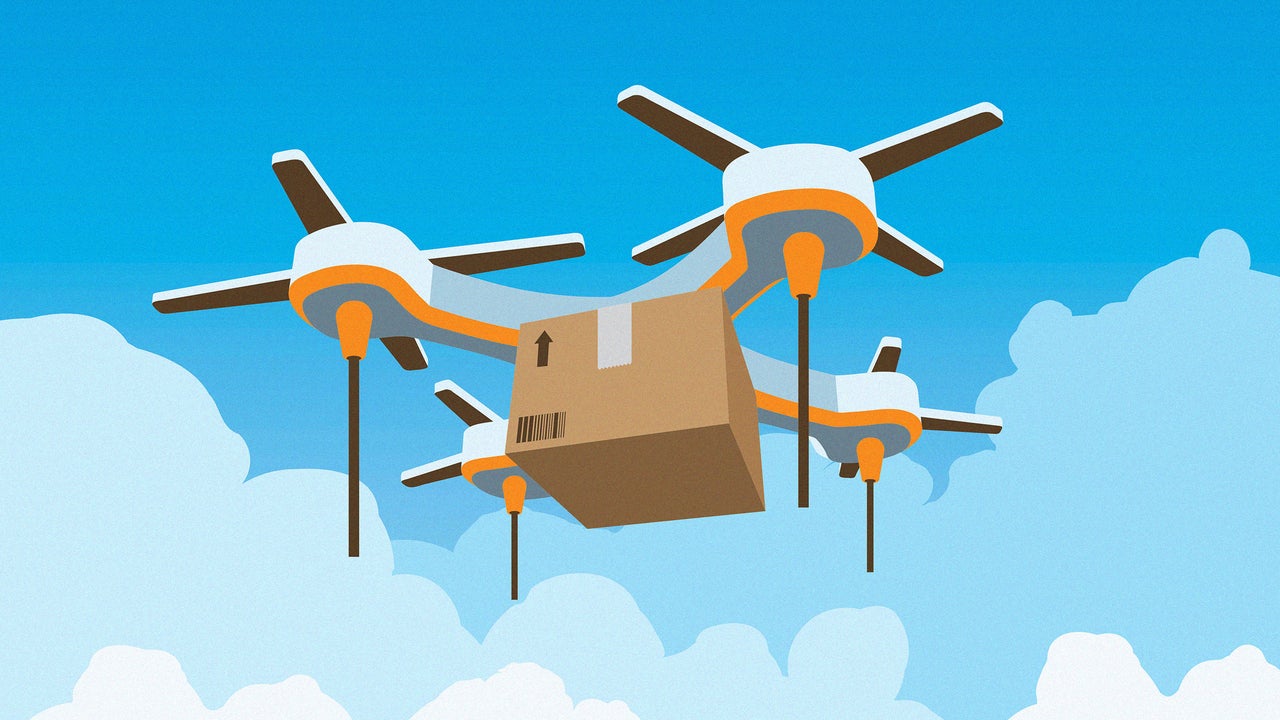
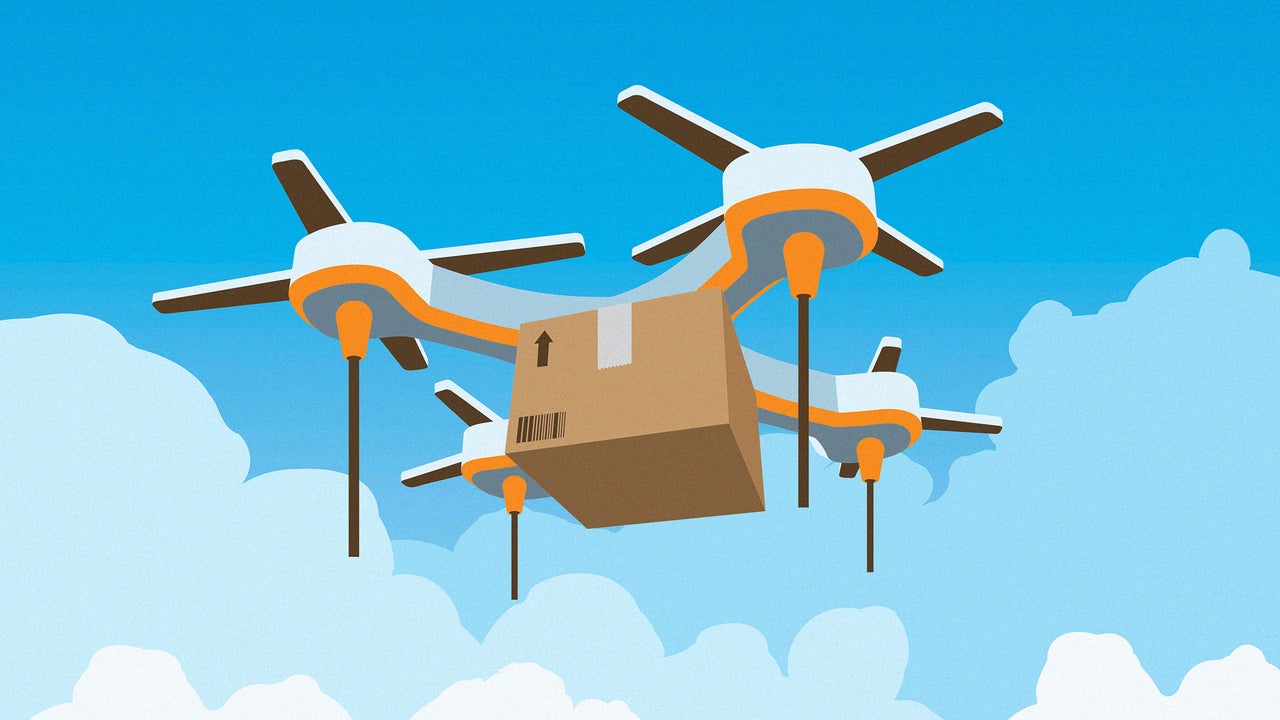
Today, almost anyone who flies a drone must maintain eye contact with it at all times, a practice known as visual line of sight. This requirement severely restricts the distance that ships can fly. When Federal Aviation Administration rule changes allowing people to fly their drones beyond line of sight are finalized, commercial use will likely skyrocket.
Beyond line-of-sight flight will fundamentally change drone operations, enabling a wide range of applications. Imagine a drone flying well ahead of a train to ensure the tracks are safe, or large drones monitoring and spraying vast agricultural fields, improving agricultural efficiency and reducing labor costs.
Drones, formally called unmanned aircraft systems, or UAS, are being used or developed for a wide variety of applications, such as inspecting oil pipelines, assessing forests for potential wildfires, finding people in need of rescue, assessing disaster damage, monitoring borders and ports, and studying wildlife and the environment. There is also an emerging industry that uses drones to deliver packages, from organs for transplants to fast food.
Companies have been working on these types of drone applications for years, but as a mechanical engineer who studies drones, I see a combination of technological and regulatory developments bringing them closer to fruition. People could be allowed to fly drones beyond line of sight, beyond the few exemptions to current rules, within a year. But a key step is the integration of drones into the National Airspace System.
Maintain control in uncontrolled airspace
The National Airspace System includes controlled and uncontrolled airspace. Air traffic controllers guide aircraft through controlled airspace, which includes areas around airports, over urban regions, and along air routes. The rules cover basic flight aspects of all aircraft, such as aircraft altitude and separation, and flight paths near or over airports. Drone operators who want to fly in these regions must receive formal authorization from the FAA for any flight, which also dictates flight routes.
In uncontrolled airspace, air traffic control does not provide services; Pilots are responsible for their own navigation and collision avoidance. In these typically rural regions, recreational operators should keep drones below 400 feet and in their line of sight. Other restrictions also apply: Drones cannot weigh more than 55 pounds, including any payloads such as packages, and must operate only during daylight hours and with a minimum visibility of 3 miles due to weather. The maximum speed relative to the ground is 100 mph and drones cannot operate within 5 miles of an airport.
In all circumstances, manned aircraft have the absolute right of way. Commercial drone operators must have an FAA remote pilot certificate. Operators who violate any of these rules may be subject to license revocation, significant fines, or imprisonment. As of early 2026, there were more than 800,000 registered drones operating primarily in uncontrolled airspace.
Flying beyond line of sight
Drone operators have a big responsibility, but allowing them to operate beyond line of sight would raise the stakes. It could also open up tremendous economic opportunities, such as widespread package delivery, long-distance inspection of power lines and railroads, surveying and mapping, extensive search and rescue operations, precision farming and crop spraying on large farms, and expanded border patrol and environmental monitoring. For many of these applications to be successful, drones would need to operate in fully autonomous mode.
The full integration of drones into the National Airspace System would require a series of steps. The current FAA Part 107 rule covers the operation of drones under 55 pounds. Under the rule, regulators have sometimes issued waivers, waivers and other authorizations to allow beyond-line-of-sight flight operations, but the regulatory process has lagged behind current drone technology.
The FAA is finalizing a new framework called Part 108 to specifically cover beyond-line-of-sight flight, including under fully autonomous control and for larger, heavier drones.
Give autonomy to drones
AI could lead to “smart” drones that can fly autonomously and navigate with the same level of safety as manned aircraft. My work in flight guidance, control and navigation systems indicates that intelligent drones could see and avoid objects in the air and could execute commands from air traffic control centers accurately and efficiently, including fully autonomous takeoffs and landings. The Northeast UAS Airspace Integration Research Alliance, AURA Network Systems and General Atomics Aeronautical Systems are working in parallel with the FAA to develop these types of advanced capabilities.
However, technology alone would not be enough. Smart drones would still need to be integrated into the National Airspace System. Several initiatives are underway. The NASA-UAS-NAS project is investigating how drones could use command and control technologies that allow them to operate autonomously in the same airspace as manned aircraft. The FAA Beyond program is developing new flight rules that drones would need.
Regulators and companies would also have to resolve the complications that drones could pose to the National Airspace System. Many drones are small, making them harder for manned aircraft to detect and avoid. Terrorists could exploit drones, raising the need to find ways to capture or shoot down rogue drones or overpower their control signals. Special arrangements may be necessary to counter such threats at high-risk targets, such as sporting events and large public gatherings, and to protect critical infrastructure, such as the power grid and nuclear facilities.
As Part 108 and other developments allow for the rise of autonomous drones, regulators will also have to consider public concerns about privacy, malicious actions, and nuisance. Increased education and awareness can alleviate these concerns.
Global change
China, the European Union and Japan have established expanded rules for autonomous drones. The United States government also recognizes the enormous economic and social potential.
The goal of FAA Part 108 is to accommodate a new approval process for piloting drones beyond the line of sight, as well as a new airworthiness framework to ensure public safety. A final rule will likely be implemented within about a year.
Agamemnon Crassidis is a professor of mechanical engineering at the Rochester Institute of Technology..
This article is republished from The Conversation under a Creative Commons license. Read the original article.
