


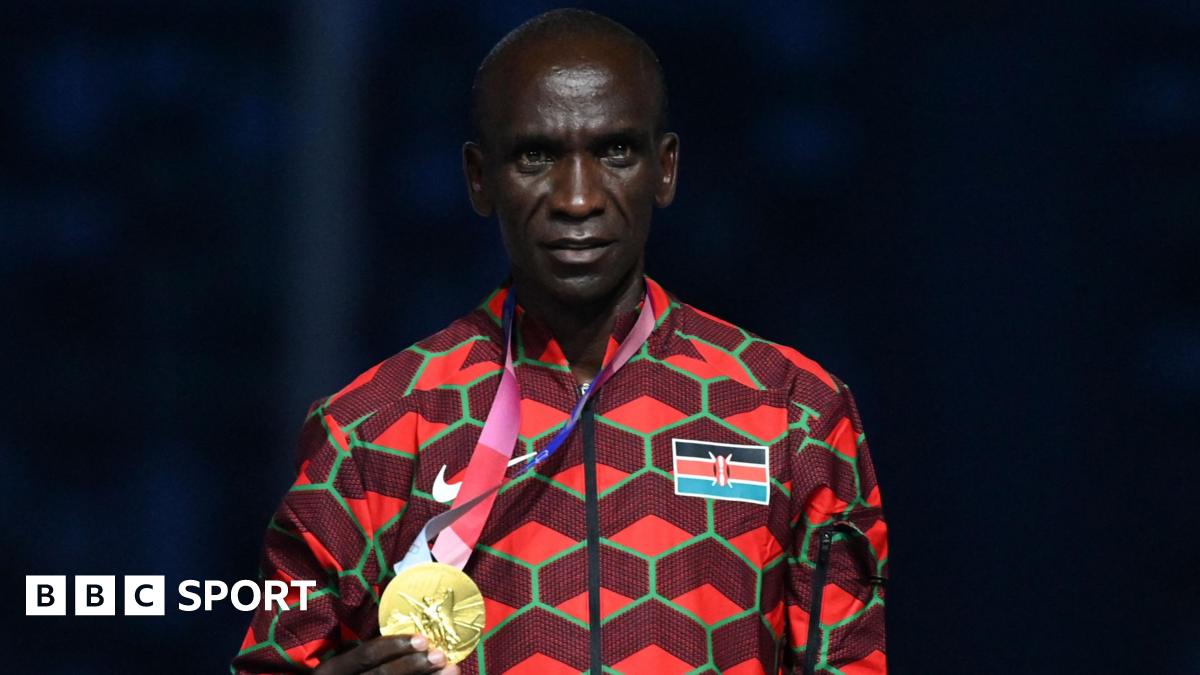
To understand the significance of this moment, it is helpful to understand the magnitude of Kipchoge’s success.
In addition to those Olympic titles, Kipchoge’s honors include a world title, 11 World Marathon Major victories and two official world records.
In one of the sport’s most impressive feats, he became the first person to break the two-hour marathon barrier in special conditions in Vienna in 2019, setting an unofficial time of one hour, 59 minutes and 40 seconds.
“If I look back at the last 23 years, the highlight was making history,” he says.
“Not winning medals, not even breaking world records, but opening the minds of people around the world to believe that they are not limited in anything they do.”
That belief has become the anchor of his next chapter.
The tour will operate under Eliud’s Running World, a long-term platform designed to promote race participation while supporting global causes.
Each marathon will raise funds for the Eliud Kipchoge Foundation, which focuses on education, environmental sustainability and health.
Kipchoge hopes to raise $1 million (£739,000) at each stop, with projects tailored to local needs.
In Kenya, their vision includes building libraries in all 47 counties. In other cities, he wants the tour to leave tangible benefits, not just memories.
“I want to leave a legacy of education,” Kipchoge says.
“There is knowledge in books. If we want to think with the outside world, we need to acquire knowledge and understand how other people think.”
Running a marathon in the extreme cold of Antarctica is not something Kipchoge sees as a stunt, but as a statement.
“It’s about pushing your limits,” he explains. “I want to show the world that you can still push your limits in anything, even in the toughest conditions.”
When asked if he is trying too hard, his response is characteristically direct.
“Life is about moving forward,” he says.
“The moment you stop pushing, it’s not life anymore.”