


Cari Brown is hooked on marathons and preparing to compete on her eleventh Sunday.
After learning of the changes, she felt forced to abandon her plans to achieve a personal best in Paris and participate in a different race to pursue her goal.
“Unfortunately, the marathon won’t be my goal. Any runner who has to stop and start looking for water, it’s going to affect their time and it’s going to affect their cadence,” Brown said.
Their biggest disappointment, however, is the decision to allow pre-filled personal water bottles on the course for runners aiming for a time under two hours and 50 minutes.
It is common practice in elite races to prevent athletes from wasting time at hydration stations, but it is not generally a luxury extended to those in the broader event.
“That’s a big advantage for generally younger male runners, since on average their marathon times are faster. It also recognizes the fact that [stopping for water] it affects your time,” adds Brown.
The IT manager from Woking will walk the streets of Paris with a hydration backpack. It’s a proven method for trail runners, but is less familiar to road runners who generally prefer to keep their gear as light as possible and rely on water provided along the course.
That worries Brown, who, while acknowledging that plastic waste is a problem, believes that not having water available in single-use paper cups on a potentially hot day is a big “risk factor,” with runners likely to skip stations if they’re busy and risk dehydration.
Organizers insist this will not be the case, with the number of aid stations increased from eight to 13 and water spray systems in operation in case of hot weather.
Thomas Delpeuch, director of the Paris Marathon, told BBC Sport that while the system is a “significant change”, it is “successful and efficient” after a trial at the city’s half marathon last month.
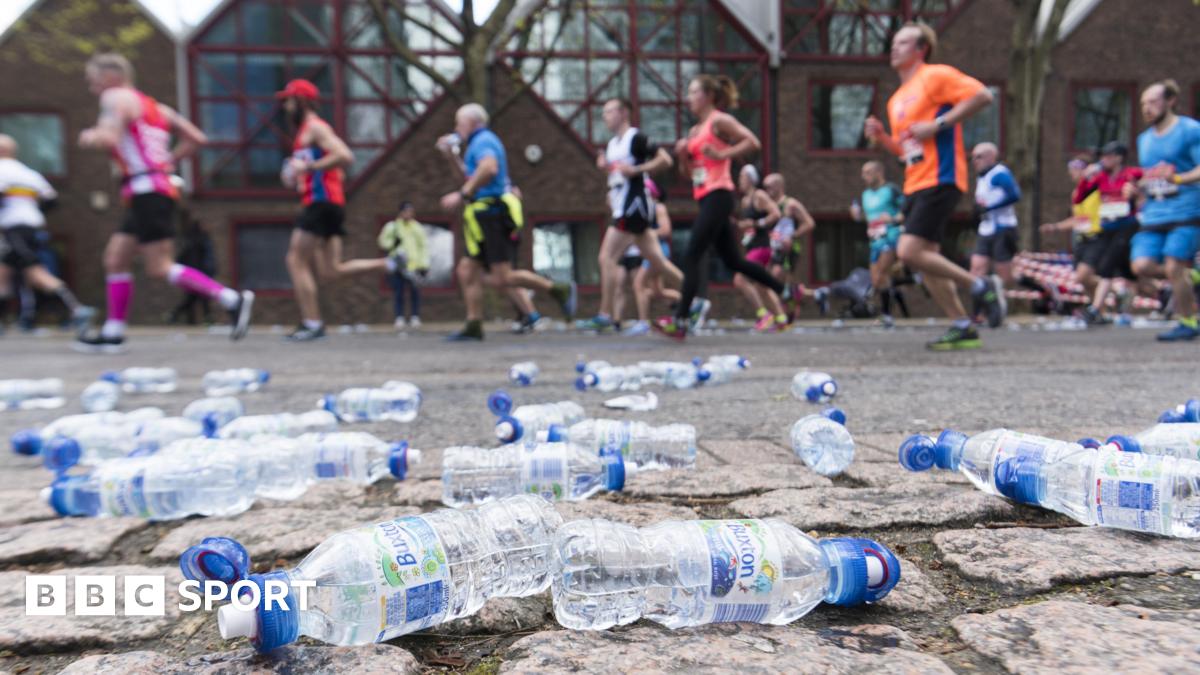
Spurred by a city-wide ban two years ago on single-use plastics in all Parisian races, this change at the marathon is expected to eliminate waste equivalent to 660,000 plastic bottles.
“Plastic is everywhere in our lives and we need firm decisions to free ourselves. Runners have appreciated bottles and cups for years for their practicality, but now things are changing,” adds Delpeuch.