


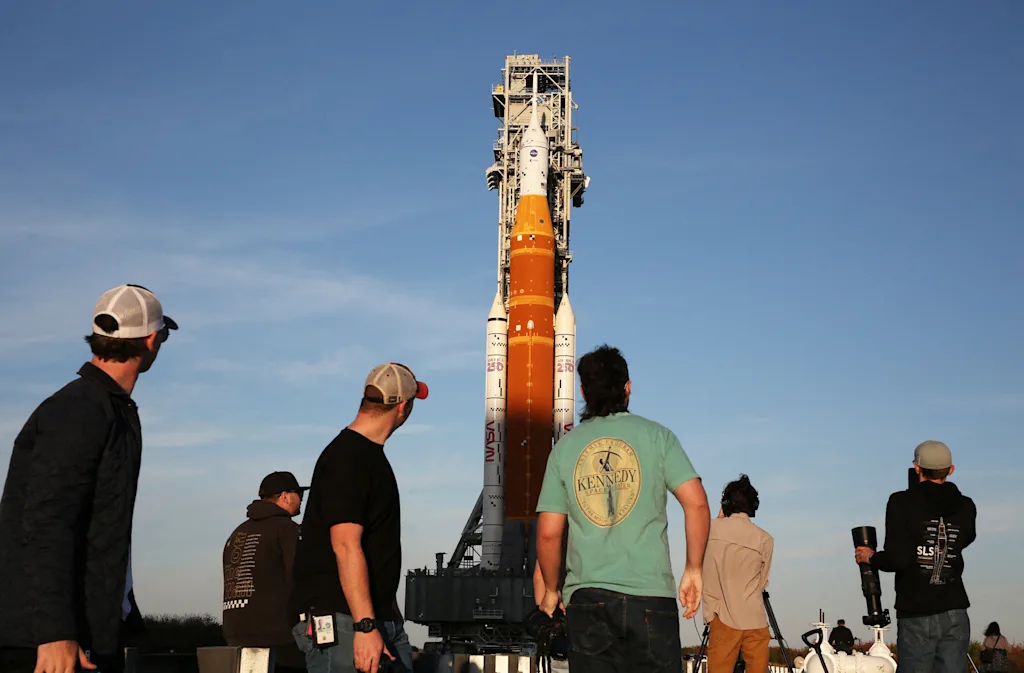
NASA Administrator Jared Isaacman just announced a radical overhaul of America’s space strategy. Dubbed “Ignition,” it is a tectonic shift in the way the nation intends to conquer the moon. Isaacman, who took command of the agency in late 2025, laid out a hyper-accelerated roadmap to build a permanent base on the lunar surface before the end of President Donald J. Trump’s term. It’s an aggressive departure from the agency’s previous trajectory, but when looking at the relentless physics and glacial pace of today’s aerospace engineering, the timeline seems like pure fantasy.
However, the plan is fantastic on paper. It sets out three phases of implementation, which will progress from landing robots to building human habitats and establishing a permanent base crew. Isaacman says the plan positions the United States to compete with China, a country that is steadily advancing its 100-year plan to build its own lunar base and establish a network of spacecraft to control and exploit the resources of our satellite and the solar system. Isaacman is well aware of this. “The clock is ticking on this great power competition, and success or failure will be measured in months, not years,” he said in NASA’s official press release announcing Ignition’s launch event at the agency’s headquarters in Washington, DC.
But the history of space exploration is not written in months. Not even years. It is written in decades. The hardware needed for all the milestones Ignition has set is nowhere near ready, starting with the landers that will carry humans from the moon’s orbit to its surface and back. According to a March 9 report from NASA’s Office of Inspector General, the lifeblood of this lunar ambition—SpaceX’s colossal Starship lander—simply won’t be ready for a 2027 landing.
no one really knows when It will be ready, as Starship continues to explode in the air from time to time. And the Space Launch System, the Boeing-built rocket that Isaacman has criticized in the past, has been delayed again and again as it is plagued with problems. Every critical component of the supply chain is notoriously behind schedule, making the prospect of building a permanent extraterrestrial habitat before January 2029 (the end of Trump’s presidency) less of a viable plan and more of a pipe dream.
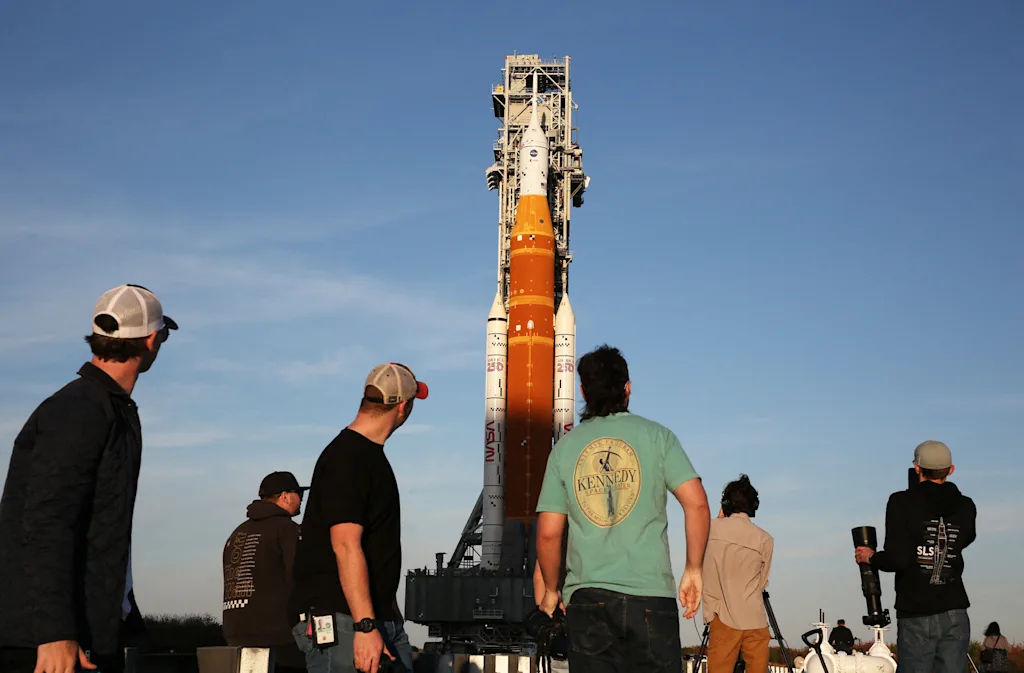
big change
The Ignition initiative begins with the immediate suspension of Lunar Gateway, the planned space station that would have orbited the moon as a cosmic tollbooth. Following the previous plan, astronauts would arrive in a spacecraft from Earth, such as Lockheed Martin’s Orion, to dock and transfer to a lunar lander made by SpaceX or Jeff Bezos’ Blue Origin, designed specifically to go up and down the surface of the moon.
Under the new plan, instead of docking with the orbital station, the lander will orbit the moon while waiting for Orion to arrive. Astronauts will transfer directly from Orion to the lunar lander (think of this spacecraft as a reusable version of the Lunar Module that carried the Apollo astronauts to the surface) to descend, leaving Orion behind. Then, at the end of the mission, they will use the lander to climb up, redock with Orion, and depart for Earth, leaving the lander in orbit for the next mission.
“It shouldn’t be a big surprise that we intend to pause Gateway in its current form and focus on building lunar infrastructure that supports sustained surface operations,” Isaacman said at the Ignition launch event, stating that NASA intends to conduct landings every six months.
This abrupt turn leaves a trail of whiplash and wasted hardware among the United States’ international allies, who had already invested heavily in the previous architecture. For years, the European Space Agency, Japan and Canada poured funds and engineering hours into building modules for the now-suspended Gateway station. In fact, Europa delivered its vital module to NASA last April, a huge metal cylinder that now lies without a destination. The sudden policy apparently left the ESA furious. An agency spokesperson said The Registry that the agency “is consulting closely with its Member States, international partners and European industry to assess the implications of the announcement, and more information will be forthcoming.”
The agency will redirect the Lunar Gateway budget toward a three-phase lunar base built directly on the regolith. This permanent outpost begins with an initial $10 billion phase to deliver rovers and power generators, and will eventually expand to support continued human occupation.
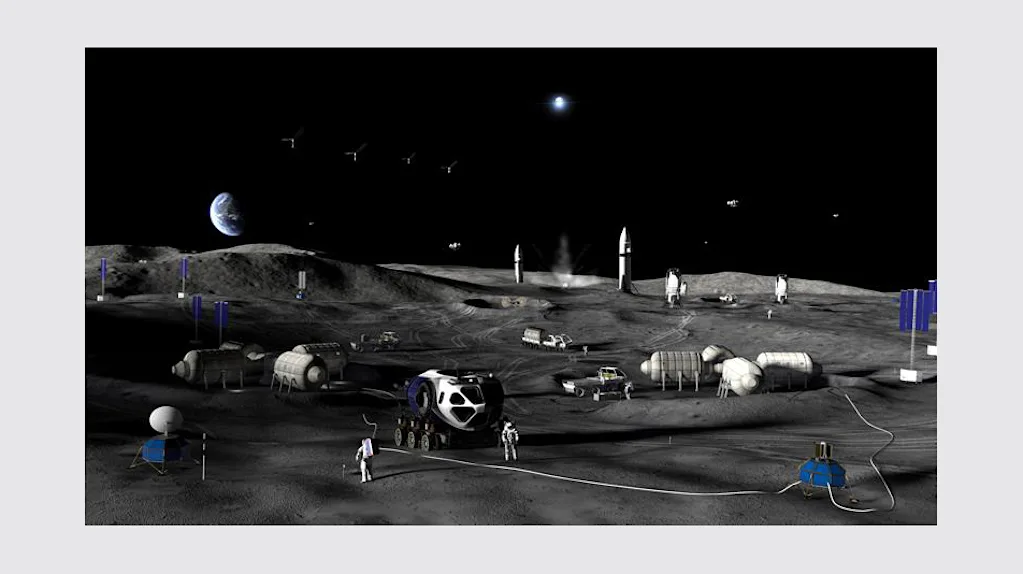
How NASA imagines it
The first phase of this ambitious agreement will take place in 2027. It depends entirely on a relentless bombardment of private robotic landers. Instead of sending humans right away, NASA will bombard the lunar landscape with scientific instruments, unmanned rovers, and advanced power systems like radioisotope thermoelectric generators (which are essentially sturdy metal boxes containing chunks of decaying plutonium that release continuous heat and electricity, an absolute necessity for machinery to survive the brutal, frigid lunar nights).
Once the robotic bases are established, phase two will begin in 2028 to support recurring astronaut visits. This will put more hardware on the surface, notably a pressurized rover built by the Japan Aerospace Exploration Agency that will allow explorers to drive across the gray wasteland in a comfortable environment and in shirtsleeves, rather than being trapped in bulky spacesuits.
Phase three will arrive in 2029. This is when the agency officially moves from brief camping expeditions to a permanent, entrenched human foothold. To make this happen, NASA plans to use mass-lift variants of the currently delayed commercial landing systems to transport heavy infrastructure, such as habitats, to the surface. This is where the rest of the international partners come into play, providing monumental equipment such as multipurpose habitats designed by the Italian Space Agency and a robust lunar utility vehicle provided by Canada.
It’s a great vision of a bustling alien colony, heavily dependent on all these colossal untested rockets that will magically mature into reliable cargo trains to the Moon in the next two years.
Can it be done?
To execute this dizzying race, NASA is fundamentally restructuring its own workforce, eliminating layers of outside contractors to hire engineers directly as civil servants and integrating federal experts directly into the factories of private suppliers.
Some observers seem quite enthusiastic. Veteran space journalist Mark Whittington, a strong supporter of the idea of a permanent lunar base, found Isaacman’s speech refreshing because it “acknowledges NASA’s shortcomings rather than downplaying or covering up” the deep delays and waste of billions that plagued previous iterations of the Artemis program.
As a son of Apollo, I am also a big supporter of permanent lunar bases. But my enthusiasm cannot overcome the harsh realities of physics, space development schedules, and congressional finances. The vision of building this is meaningless without the real cash to buy aluminum and fuel.
While a recent Senate committee introduced the NASA Authorization Act of 2026, which implicitly endorses this exact lunar base concept, that legislation doesn’t actually allocate a dime to the agency. As space policy analyst Marcia Smith bluntly pointed out to SpacePolicyOnline: “Authorization bills don’t provide money; only appropriators do.”
Even if the financial floodgates open tomorrow, the physics required to keep fragile human bodies alive in the deadly vacuum of space cannot be accelerated by political mandates. NASA’s sobering March OIG report explicitly praised NASA’s management but raised glaring alarms regarding crew safety on commercial landers developed by Musk’s SpaceX and Bezos’ Blue Origin. The watchdog discovered a frightening blind spot in the current architecture: If a disaster strikes astronauts while walking on or orbiting the lunar surface, NASA has absolutely no ability to mount a rescue mission. Launching untested vehicles into the unforgiving environment of space without a safety net is a gamble that, as history shows, often ends in tragedy.
We’ve seen this movie before, witnessed private lunar landers crash into regolith, and watched new and legacy aerospace giants stumble over engineering hurdles for years. Isaacman’s desire to trim the bureaucratic fat and focus the agency’s bright minds directly on the machinery is a profoundly noble and refreshing shift in philosophy: NASA as a startup. Excellent. Transport me.
But decreeing that a permanent lunar base and a nuclear-powered Martian flagship will materialize before 2029 ignores the brutal and unforgiving nature of orbital mechanics and the established cadence of human spaceflight. For all its good intentions and bold rhetoric, barring a hundred miracles, this sweeping new roadmap remains as deeply tied to fantasy as the long-delayed plans it just replaced.