


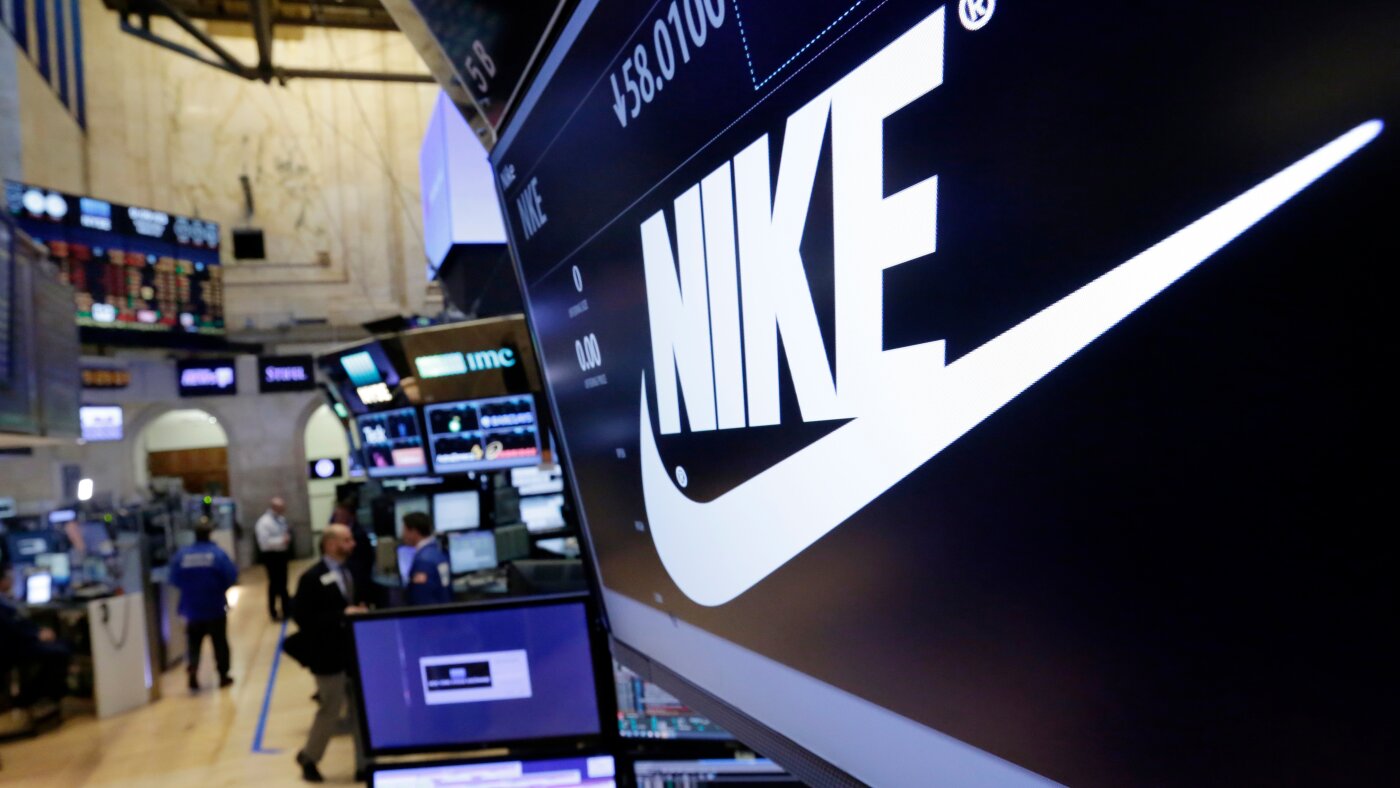

The Nike logo appears above its listing on the New York Stock Exchange on March 22, 2017.
Richard Drew/AP
hide title
toggle title
Richard Drew/AP
NEW YORK – The federal agency for the protection of workers’ civil rights revealed Wednesday that it is investigating sportswear giant Nike for allegedly discriminating against white employees through its diversity policies.

The Equal Employment Opportunity Commission disclosed the investigation in a motion filed in federal court in Missouri demanding that Nike fully comply with a subpoena seeking information.
The EEOC sought the company’s criteria for selecting employees for layoffs, how it tracks and uses racial and ethnic data on workers, and information about programs that allegedly provided racially restricted mentoring, leadership or career development opportunities, according to court documents.
In a statement, Nike said the company has worked to cooperate with the EEOC and that the subpoena “feels like a surprising and unusual escalation.”
“We have shared thousands of pages of information and detailed written responses to the EEOC investigation and are in the process of providing additional information,” Nike said in a statement to The Associated Press.
EEOC Chairwoman Andrea Lucas has moved quickly to address diversity and inclusion policies she has long criticized as potentially discriminatory, closely aligning the agency with one of President Donald Trump’s top priorities.
Nike appears to be the highest-profile company the EEOC has targeted with a publicly confirmed formal anti-DEI investigation. In November, the EEOC issued a similar subpoena against financial services provider Northwestern Mutual.

“Where there are compelling indications, including corporate admissions in extensive public materials, that an employer’s diversity, equity and inclusion-related programs may violate federal prohibitions against racial discrimination or other forms of unlawful discrimination, the EEOC will take all necessary actions, including subpoena actions, to ensure the opportunity for a full and thorough investigation,” Lucas said in a statement.
The disclosure comes two months after Lucas posted a call on social media urging white men to report if they have experienced racial or sexual discrimination at work. The post invited eligible workers to contact the agency “as soon as possible” and directed users to the agency’s fact sheet on DEI-related discrimination.
The investigation against Nike, however, does not arise from any employee complaints against the company. Rather, Lucas filed his own complaint in May 2024 through a less frequently used tool known as a commissioner’s charge, according to court documents. His position came just months after America First Legal, a conservative legal group founded by top Trump adviser Stephen Miller, sent the EEOC a letter outlining complaints against Nike and urging the agency to file a commissioner position.
America First Legal has inundated the EEOC with similar letters in recent years about extensive investigations into the DEI practices of major U.S. companies. It’s unclear how many other companies the EEOC may be targeting through the charges of those commissioners. The EEOC is prohibited from disclosing any charges (by employees or commissioners) unless they result in fines, settlements, legal action, or other similar public actions.
Lucas’ accusation, according to court documents, was based on information shared publicly by Nike about its commitment to diversity, including executive statements and proxy statements. The indictment, for example, cited Nike’s publicly stated goal in 2021 of achieving 35% representation of racial and ethnic minorities in its corporate workforce by 2025.

Many American companies made similar commitments in the wake of the widespread 2020 racial justice protests that followed the police killing of George Floyd, an unarmed Black man. The companies have said those commitments are not quotas but rather goals they hoped to achieve through methods such as expanding recruiting efforts and eradicating any bias during the hiring process.
Under Title VII of the Civil Rights Act, employers are prohibited from using race as a criterion for hiring or other employment decisions. Lucas has long warned that many companies risk crossing that line through DEI efforts that would pressure managers to make decisions based on race.
In its statement, Nike said it follows “all applicable laws, including those prohibiting discrimination. We believe our programs and practices are consistent with those obligations and we take these matters seriously.”