

US base in Saudi Arabia under attack
Fox News Chief National Security Correspondent Jennifer Griffin joins ‘America Reports’ to provide the latest on the fallout from the US and Israeli attacks on Iran.
NEWNow you can listen to Fox News articles!
Iran entered a new chapter on Saturday after Supreme Leader Ayatollah Ali Khamenei was assassinated, abruptly ending more than three decades of authoritarian rule and setting in motion a leadership transition that the regime had long prepared.
A senior Arab diplomat told The Times of Israel that while Khamenei’s demise is a “massive blow” to the Islamic Republic, Tehran anticipated the possibility and took measures to resist such a scenario.
“Mere survival, at this point, would be considered a victory,” the diplomat said of the regime, according to the outlet, following US and Israeli attacks across the country.
A recent report of the Council on Foreign Relations (CFR) outlined three broad trajectories for a post-Khamenei Iran: managed regime continuity, an overt or progressive military takeover, or systemic collapse.
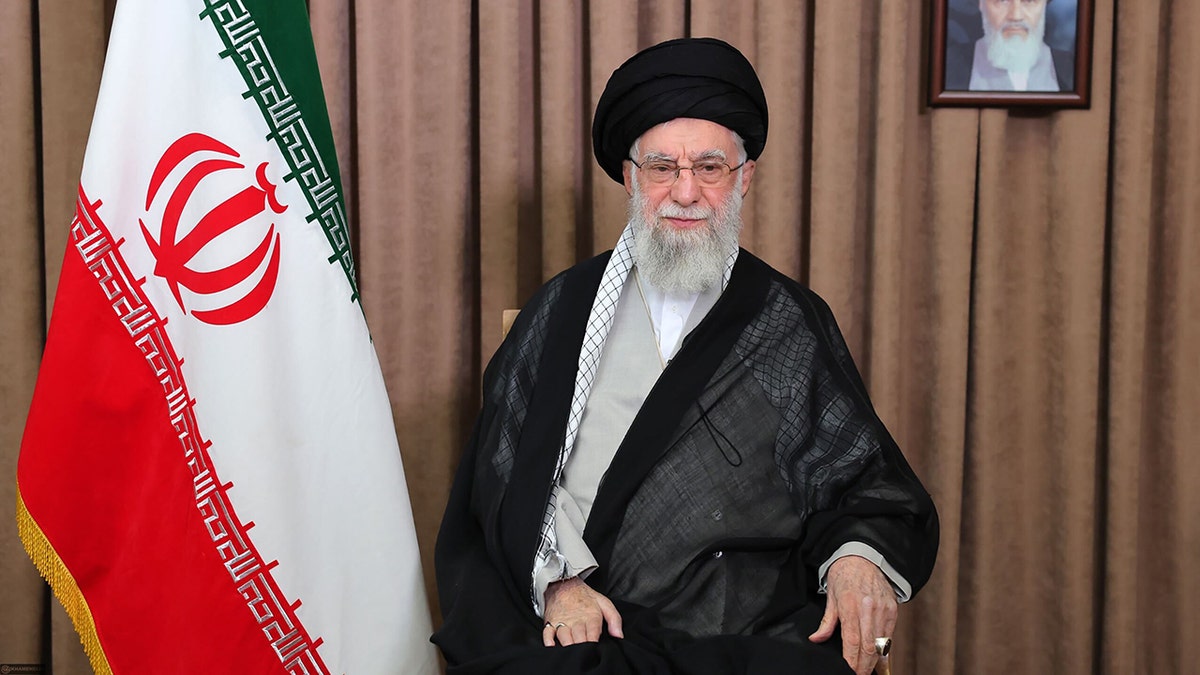
Iranian Supreme Leader Ali Khamenei was killed in an Israeli strike on Saturday. (Office of the Supreme Leader of Iran via Getty Images)
CFR warned that even a leadership change at the top would not necessarily translate into significant political reform in the short term, given the regime’s deeply institutionalized power structure and its history of using force to maintain control.
The report notes that the true balance of power lies within a narrow circle of clerical elites and the Islamic Revolutionary Guard Corps (IRGC).
It describes a likely “continuity” scenario that would produce a “Khameneiism without Khamenei,” in which a successor within the regime preserves the ideological framework of the Islamic Republic while relying on established security institutions to preserve stability.
LEAKED DOCUMENTS EXPOSE KHAMENEI’S SECRET DEADLY PROJECT TO CRUSH PROTESTS IN IRAN
“The constitution of the Islamic Republic includes a succession process. The Assembly of Experts, a clerical body, is constitutionally charged with selecting the next supreme leader,” said Jason Brodsky, policy director of United against nuclear Iran (UANI), told Fox News Digital.
“In the meantime, there should be a vacancy in the leadership, an interim leadership council is formed consisting of the president, the chief justice and a member of the Guardian Council selected by the Expediency Council,” he added. “The IRGC is a key stakeholder in this process and will greatly influence its outcome.”
Over the past three decades, the Bayt-e Rahbari, or Office of the Supreme Leader, expanded into what a report from february by the UANI described as an “expanding parallel state” that operates alongside Iran’s formal institutions.
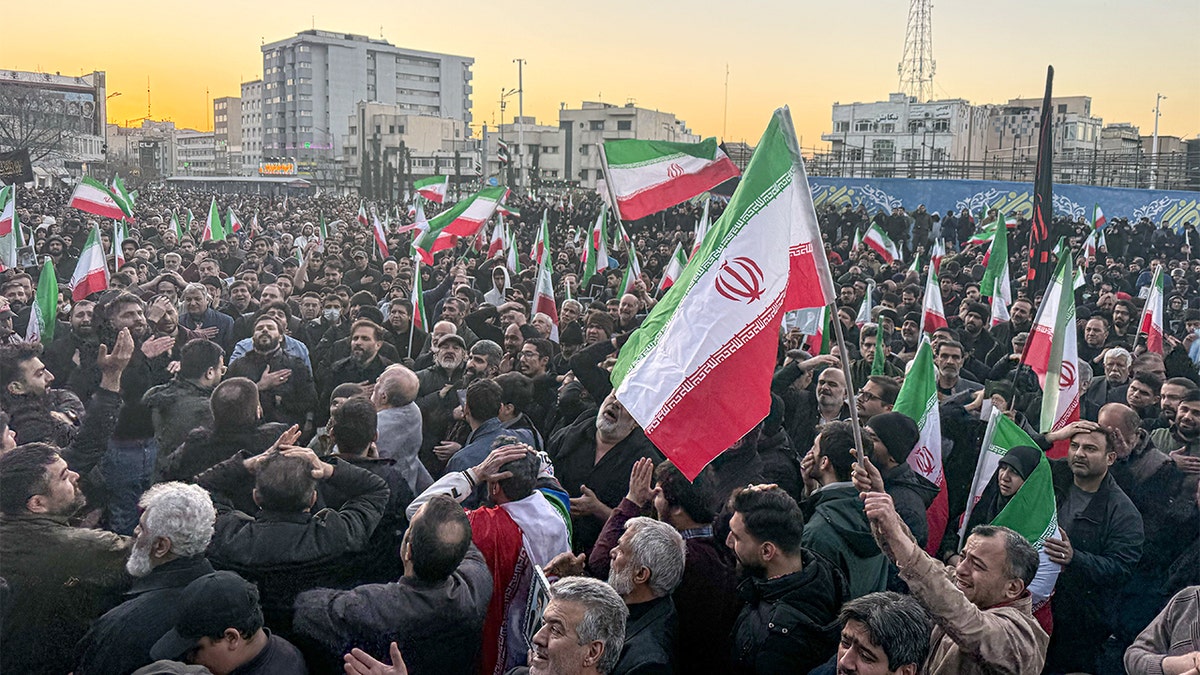
Large crowds gather in Enghelab Square in Tehran on Sunday after Iranian state television announced that Supreme Leader Ayatollah Ali Khamenei was killed in an Israeli strike. (Fatemeh Bahrami/Anadolu via Getty Images)
The analysis characterizes the Bureau as the regime’s “hidden nerve center,” extending control across the military, security establishment, and major economic bases in ways that make the system’s authority institutional rather than dependent on Khamenei’s physical presence.
CLICK HERE TO DOWNLOAD THE FOX NEWS APP
“The supreme leader today is no longer just a man; he is represented through an all-encompassing institution that consolidates power, manages succession and ensures continuity,” the nonpartisan political organization said. “The Islamic Republic’s most enduring strength lies in this hidden architecture of control, which will continue to shape the country’s future long after Khamenei himself leaves the scene.”
Related article