


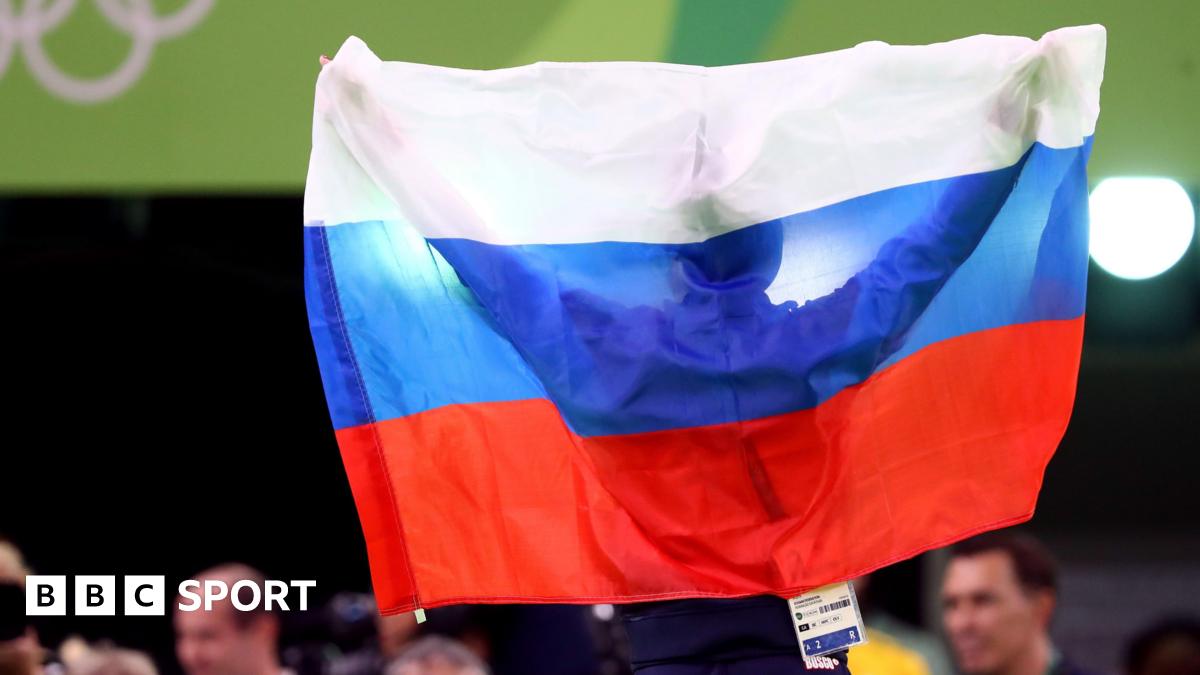
WADA revealed details of a state-sponsored doping program in 2015 and declared that the Russian Anti-Doping Agency (Rusada) was not in compliance with the World Anti-Doping Code.
But WADA’s executive committee voted to reinstate Rusada in September 2018, subject to a number of strict conditions.
The move was condemned in some circles at the time, with one critic calling it “the biggest betrayal against clean athletes in Olympic history.”
However, Wada said that move directly led to the recovery of 24 terabytes of data from the Moscow lab in January and April 2019.
“The decision made in 2018 to reinstate Rusada under strict conditions – despite opposition from a vocal minority of critics – was made precisely to get to the truth and was part of a sophisticated investigative strategy,” Banka added., external.
“Without that decision, we would never have been able to obtain the critical tests from the Moscow laboratory necessary to process these cases.
“I am pleased to say that history has proven that this approach is effective and that the entire process has been a notable success in ensuring justice for athletes around the world.”
While investigating the recovered material, it was established that some of the data had been manipulated, ultimately leading to Russia receiving a four-year ban from participating in all major sporting events in 2019.
Russia’s doping ban ended in 2023, although its teams and competitors were banned by multiple international sporting bodies following the invasion of Ukraine.
Some organizations have begun allowing Russian athletes to compete under their flag in recent months.