

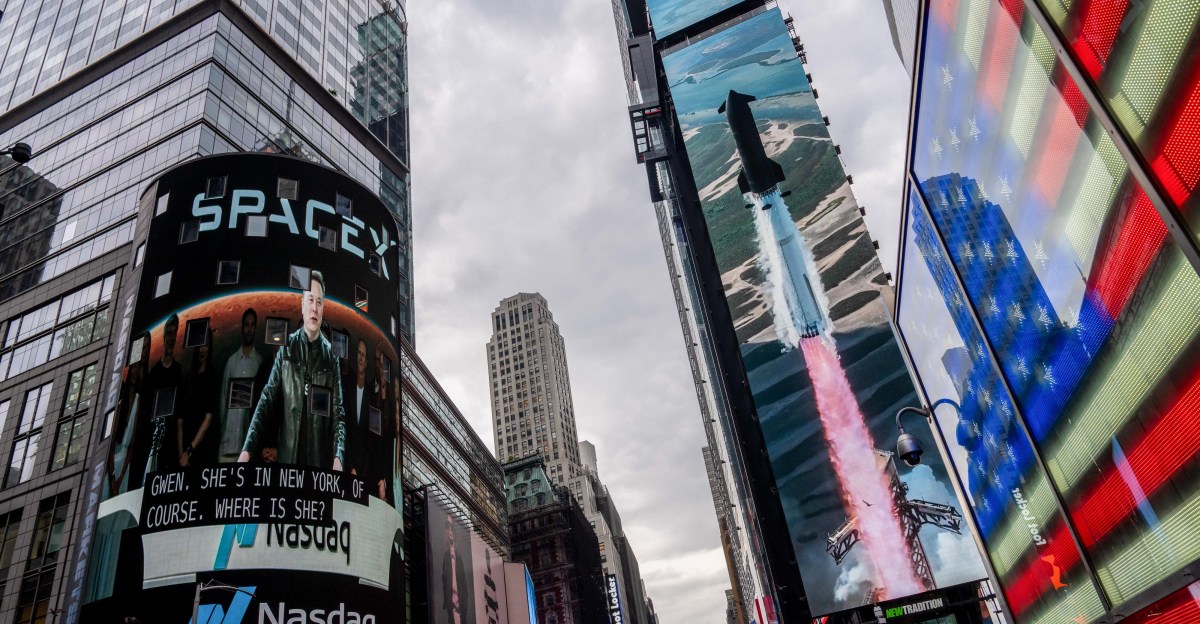
It’s official. Elon Musk is now the world’s first billionaire, following his rocket company SpaceX’s record $2 trillion debut on the NASDAQ last Friday.
With a staggering net worth of $1.4 trillion growing by the day, Musk is now worth more than the entire economy of Switzerland. He is more than 13 times richer than Bill Gates, and if you are anywhere near the middle class, he is more than 11 million times richer than you. He’s rich enough to collectively buy every seat to every World Cup game, every ticket in every city on Taylor Swift’s Eras Tour, and every ticket to every Broadway show for the next 10 years or so, barely making a dent in his massive fortune.
An important caveat here: The vast majority of Musk’s wealth is wrapped up in shares of his companies, not cash, in the same way that most Americans’ wealth is tied up in their homes. While the dollar figure has 12 zeros attached to it, there would be no way for Musk to convert all or even most of it into cash, Scrooge McDuck style, without collapsing the companies’ value. (In the case of SpaceX, it is legally prohibited from selling shares for 366 days after the IPO.) Don’t feel too bad for him, though: Billionaires (sorry, trillionaires) like Musk tend to borrow most of the money they spend, rather than selling their investments, which also serves as a clever way to avoid paying taxes.
In other words, even if Musk doesn’t actually have a trillion dollars in a vault, he still has reasonable access to an obscene amount of money, enough to easily outspend any political campaign in the US or, as he joked on X on Monday, install the volcano lair he’s always dreamed of.
On the eve of becoming a billionaire, Musk told Peter Diamandis, head of the
For now, however, money remains our primary means of exchange for goods and services, and Musk has access to more money than he could ever spend. And that means he has the opportunity to share his enormous fortune.
Unfortunately, Musk is a notoriously terrible philanthropist.
Although he once pledged to give away most of his fortune, Musk donates only a tiny fraction of his net worth to charities each year, much of it funneled through a secret charitable foundation that was fined three years in a row by the Internal Revenue Service for hoarding cash. The (only comparatively) much less well-off Gates has donated more than $100 billion, or more than 20 percent of his wealth, to charities so far, while Musk had donated less than 1 percent before becoming a billionaire.
And while he’s prone to making the occasional lofty promise—solving world hunger, solving the Flint water crisis, or covering the salaries of TSA workers during the last government shutdown—he’s never delivered on any of those promises. Instead, he spent much of last year carrying a chainsaw to life-saving USAID programs, the loss of which has since been linked to hundreds of thousands of deaths around the world.
Becoming a billionaire seems unlikely to soften Musk. However, if musk In fact If you care about humanity, there are some things you could do:
1. Lift hundreds of millions of people out of extreme poverty
According to an analysis published last year, ending the worst form of poverty worldwide would cost just $318 billion a year.
By distributing just over a quarter of his net worth, Musk could ensure that one-eighth of the world’s population had enough food to eat each day, a safe haven to sleep in, and water clean enough to drink. At his current level, he would still have around a trillion left over, and at the rate his wealth continues to grow, he can likely keep up the effort for years to come.
2. Pay all medical debts in the United States
About one in three Americans has an overdue medical bill, the kind of wholly involuntary and often predatory debt that can quickly turn a cancer diagnosis into bankruptcy. The approximately $220 billion that Americans owe in medical debt today drives families into food insecurity and causes many to avoid medical care for fear of unpayable costs.
Although Musk insists that the robots his companies are developing will soon replace surgeons and revolutionize access to health care, he could begin to improve American health care simply by footing the bill.
3. Fund universal preschool
Many American parents spend tens of thousands of dollars each year (often more than 15 percent of their income) on child care costs. But, as my colleague Anna North often writes, momentum has been growing for universal preschool programs, which, when implemented well, can have important benefits for working children and families.
The price of building such a program nationwide? About $351 billion over 10 years, according to economists at the University of Pennsylvania, including the construction of new facilities. At that rate, Musk could pay for more than three decades.
4. Climate-proofing the world
About half of the world’s population (4.1 billion people) lives somewhere exposed to the most dangerous effects of climate change, including heat waves, droughts and rising sea levels. Many of those people live in low- or middle-income countries that cannot afford the kind of cooling systems, flood protection, and irrigation strategies they need to stay safe.
The annual cost of ensuring that all countries can adapt to these new extreme climate realities? $1.2 trillion, or almost all of Musk’s net worth.
A few years ago, Musk pledged to sell $6 billion worth of Tesla stock to support the World Food Program if he could provide an accurate explanation for his claim that such a donation could fund an end to the most severe forms of global hunger. Within days, the WFP responded with a detailed plan on how to use $6.6 billion to feed 42 million people on the brink of famine. Musk, however, never followed through.
In reality, ending world hunger altogether would cost considerably more than $6 billion. Still, the United Nations believes it would cost about $93 billion annually to end global hunger by 2030, a total cost of $465 billion or just about a third of Musk’s net worth.
6. They research cures for cancer and other diseases.
If you want a cure for cancer, a vaccine for dementia, or anything else worth discovering, then you need to fund scientific research. In 2023, the United States will invest about $993 billion in research and development, including new medical advances.
With his wealth, Musk could more than offset the billions in federal science funding that the Trump administration cut last year, potentially leading to advances that might otherwise stall.
7. Bring everyone drinking water
More than 4 billion people around the world lack access to clean water in their homes, putting them at risk of contracting dangerous waterborne diseases such as cholera and dysentery.
Providing people with clean water and sanitation services means building better pipes, filtration systems and well networks. According to the United Nations, it would cost around $114 billion a year to bring clean water to everyone in the world. Musk could finance that effort alone for a decade or more.
8. End homelessness in America
Musk could easily pay for decades of housing solutions to the country’s homelessness and affordability crises. Most estimates put the cost of ending homelessness in the United States (which affects about 770,000 Americans at any given time) at between $10 billion and $30 billion each year.
It could also choose to greatly reduce the country’s housing shortage, which is one of the root causes of homelessness. The Council for American Progress estimates that building the 2 million homes needed to close the supply gap would cost about $95 billion over five years.
9. Eradicate tuberculosis and malaria forever
Tuberculosis is the world’s deadliest infectious disease, infecting around 10 million people and killing around 1.5 million each year. Eradicating tuberculosis by 2030 would cost about $250 billion, much more than the less than $6 billion spent on prevention and treatment in 2024.
Musk could use a fraction of his fortune to finance the end of tuberculosis. While doing so, it could also stop malaria, which would cost an estimated $8.5 billion a year to eradicate.
10. Give everyone in the world a check for $146
Here’s a simple one. If just $1.2 trillion of Musk’s net worth (let’s leave some to him!) were divided equally among the world’s 8.2 billion people, everyone would receive a $146 check. In the United States, that’s enough for about a week of shopping or most of an annual Netflix subscription.
But in other countries, a check like that could be life-changing. In Zambia, where most people live on less than $2 a day, that $8 billion slice of Musk’s pie could cover a few months of basic needs, school fees and housing costs.